(Plus 2 Fat-Burning Breakfast Recipes)
Many people think metabolism is controlled mainly by genetics or strict dieting.
But in reality, metabolism is influenced every day by small habits, such as how we eat, how we sleep, how we move, and even how we break our overnight fast.
In my clinic, I often see people working very hard to lose weight, yet unknowingly following habits that keep their metabolism stuck in sugar-burning mode rather than allowing the body to access stored fat.
The good news is that metabolism responds beautifully to small, consistent changes.
Below are seven habits that quietly improve metabolic health over time.
1. First Meal of the Day Matters for Metabolism
After the overnight fast, the body is already moving toward fat utilisation for energy.
During the night several metabolic changes occur:
• insulin levels fall
• glycogen stores begin to decrease
• fat oxidation increases
• growth hormone supports cellular repair
This means the body wakes up already in a gentle fat-burning state.
The first meal of the day determines whether this beneficial metabolic state continues or stops.
If the day begins with refined carbohydrates such as toast, cereal, pastries or fruit juice, blood sugar rises rapidly and insulin increases.
This shift signals the body to switch back into sugar-burning mode, stopping fat mobilisation.
However, when the first meal contains protein, fibre and healthy fats, several beneficial metabolic effects occur:
• blood sugar rises slowly
• insulin remains stable
• satiety hormones improve
• fat oxidation continues
• cravings later in the day decrease
This is why a PPP-style breakfast (Protein, Plants/Fibre, and Purposeful fats) is so effective for people working on metabolic health or weight regulation.
Metabolism Supporting Breakfast Recipe
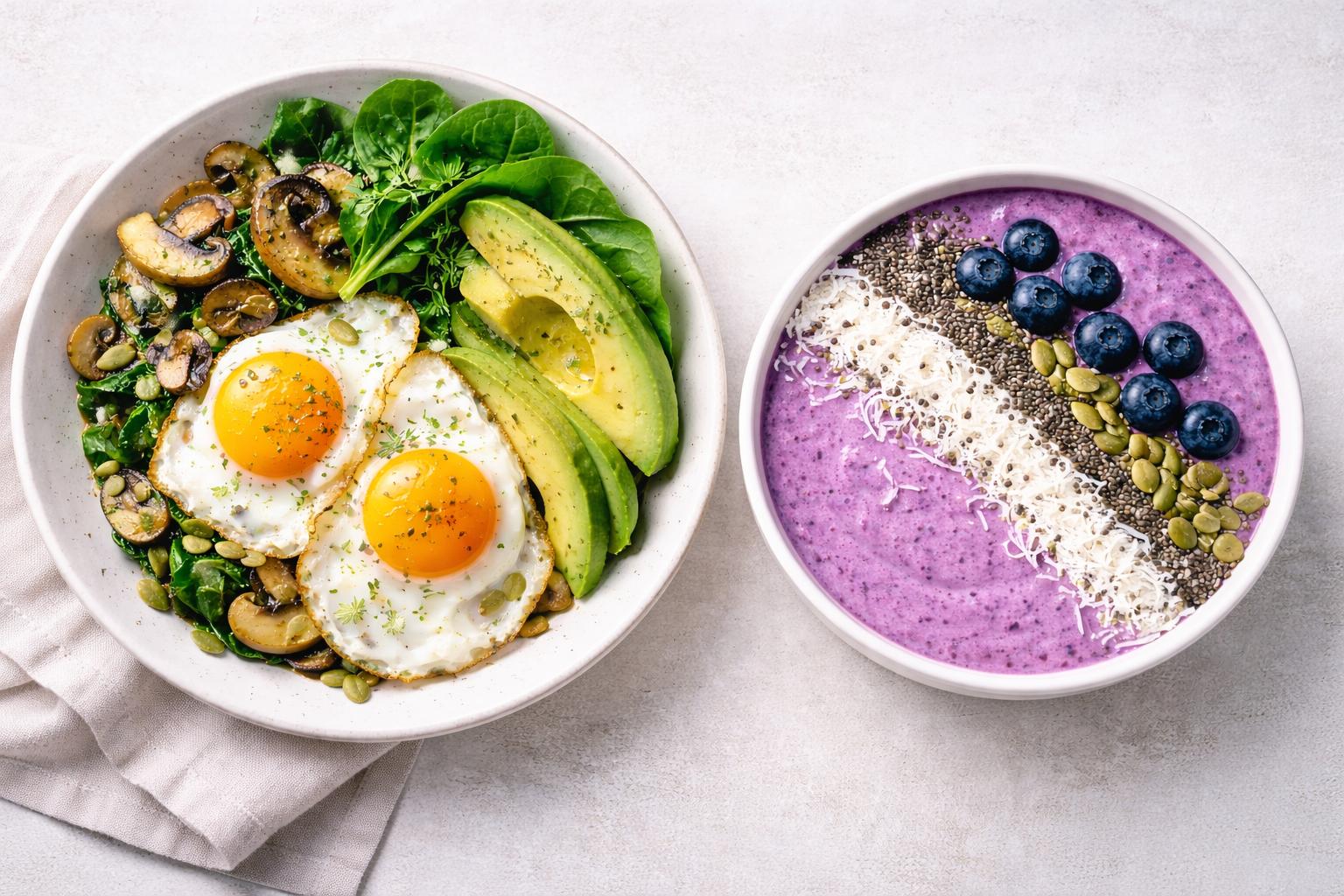
Mediterranean Protein & Greens Plate
This is a warm, nourishing breakfast that supports metabolic flexibility while providing minerals, fibre and healthy fats.
Ingredients
2 eggs
½ cup sautéed zucchini slices
½ cup sautéed mushrooms
1 handful baby spinach
½ avocado
1 tablespoon olive oil
1 tablespoon pumpkin seeds
1 tablespoon crumbled feta (optional)
Pinch sea salt and black pepper
Fresh parsley or basil
Method
Heat olive oil in a pan over medium heat.
Add zucchini and mushrooms and sauté until lightly golden.
Add spinach and cook briefly until wilted.
Cook eggs to your preference.
Place vegetables on a plate, add eggs on top, then add avocado slices.
Sprinkle pumpkin seeds and feta over the dish and finish with fresh herbs, salt and pepper.
Why This Breakfast Supports Metabolism
Protein
Eggs support muscle metabolism and stimulate satiety hormones that help reduce overeating later in the day.
Healthy fats
Avocado, olive oil and pumpkin seeds provide stable energy while slowing glucose absorption.
Fibre and micronutrients
Vegetables support the gut microbiome and help regulate blood sugar.
This combination allows the body to continue accessing stored fat for energy while maintaining steady energy levels throughout the morning.
PPP Metabolic Smoothie Bowl
A sweet breakfast option that still supports stable blood sugar and fat-burning metabolism.
This recipe works particularly well for people who enjoy lighter breakfasts but still want metabolic support.
Blueberry Kefir Metabolic Bowl
Ingredients:
½ cup kefir
1 scoop clean protein powder (whey, collagen, or plant protein)
½ cup blueberries
1 tablespoon chia seeds
1 tablespoon pumpkin seeds (pepitas)
1 tablespoon coconut flakes
¼ teaspoon cinnamon
Optional: 1–2 tablespoons unsweetened almond milk to adjust texture
Toppings:
Extra blueberries
Coconut flakes
Chia seeds
Pumpkin seeds
Method
Place kefir, protein powder, blueberries and cinnamon in a blender.
Blend until thick and creamy.
Pour into a bowl.
Top with chia seeds, pumpkin seeds, coconut flakes and a few extra blueberries.
Serve immediately.
Why This Smoothie Bowl Supports Metabolism
Protein
Protein powder and kefir provide amino acids that support muscle metabolism and satiety.
Healthy fats
Coconut flakes and pumpkin seeds provide fats that stabilise blood sugar and sustain energy.
Fibre
Chia seeds and berries slow glucose absorption and support gut health.
Fermented foods
Kefir introduces beneficial bacteria that support digestion and metabolic health.
Because this smoothie bowl contains protein, fibre and fats with very little sugar, it avoids the blood sugar spike often seen with traditional smoothie bowls made from bananas and fruit juices.
The result is:
• steadier energy
• reduced cravings
• improved metabolic flexibility
• better appetite control later in the day
2. Walk After Meals
A simple 10–15-minute walk after eating can significantly improve glucose metabolism.
Movement helps muscles use glucose for energy, preventing large blood sugar spikes.
Many people also notice improved digestion and reduced afternoon fatigue.
3. Prioritise Protein at Meals
Protein plays an important role in metabolism because it:
• stabilises blood sugar
• supports muscle maintenance
• increases satiety
When meals are very low in protein, people often experience stronger cravings later in the day.
4. Eat Protein and Fat First
Starting meals with 3-4 mouthfuls of protein and fat may slow glucose absorption and reduce blood sugar spikes.
This can improve metabolic flexibility and reduce hunger between meals.
5. Sleep Is a Metabolic Tool
Poor sleep increases cortisol and disrupts appetite hormones such as ghrelin and leptin.
Even one or two nights of poor sleep can increase sugar cravings and reduce insulin sensitivity.
Protecting sleep is one of the most powerful ways to support metabolism.
6. Support the Liver
In Chinese medicine, the liver system plays an important role in metabolic regulation.
When the liver becomes overloaded from stress, alcohol, processed foods, or poor sleep. Often, people experience:
irritability and frustration
digestive discomfort
sugar cravings
weight gain around the abdomen
Supporting the liver through whole foods, green vegetables, and stress regulation helps restore metabolic flow.
7. Reduce Ultra-Processed Foods
Highly processed foods often contain combinations of refined carbohydrates, industrial oils, and additives that disrupt metabolic regulation.
Replacing these foods with simple whole meals allows the body to return to a more balanced metabolic rhythm.
The Quiet Power of Consistency
Improving metabolism rarely requires extreme diets.
Instead, it usually comes from small habits repeated daily:
balanced meals
good sleep
gentle movement
stable blood sugar
When these foundations are in place, the body becomes far more willing to release excess weight and maintain energy naturally.
The body is remarkably intelligent when given the right conditions.
For more information on how an integrative care approach can help you balance hormones, metabolism and reach a healthy weight, go to our website and check out our PPP-Method page to find out how we can help.




Leave a Reply