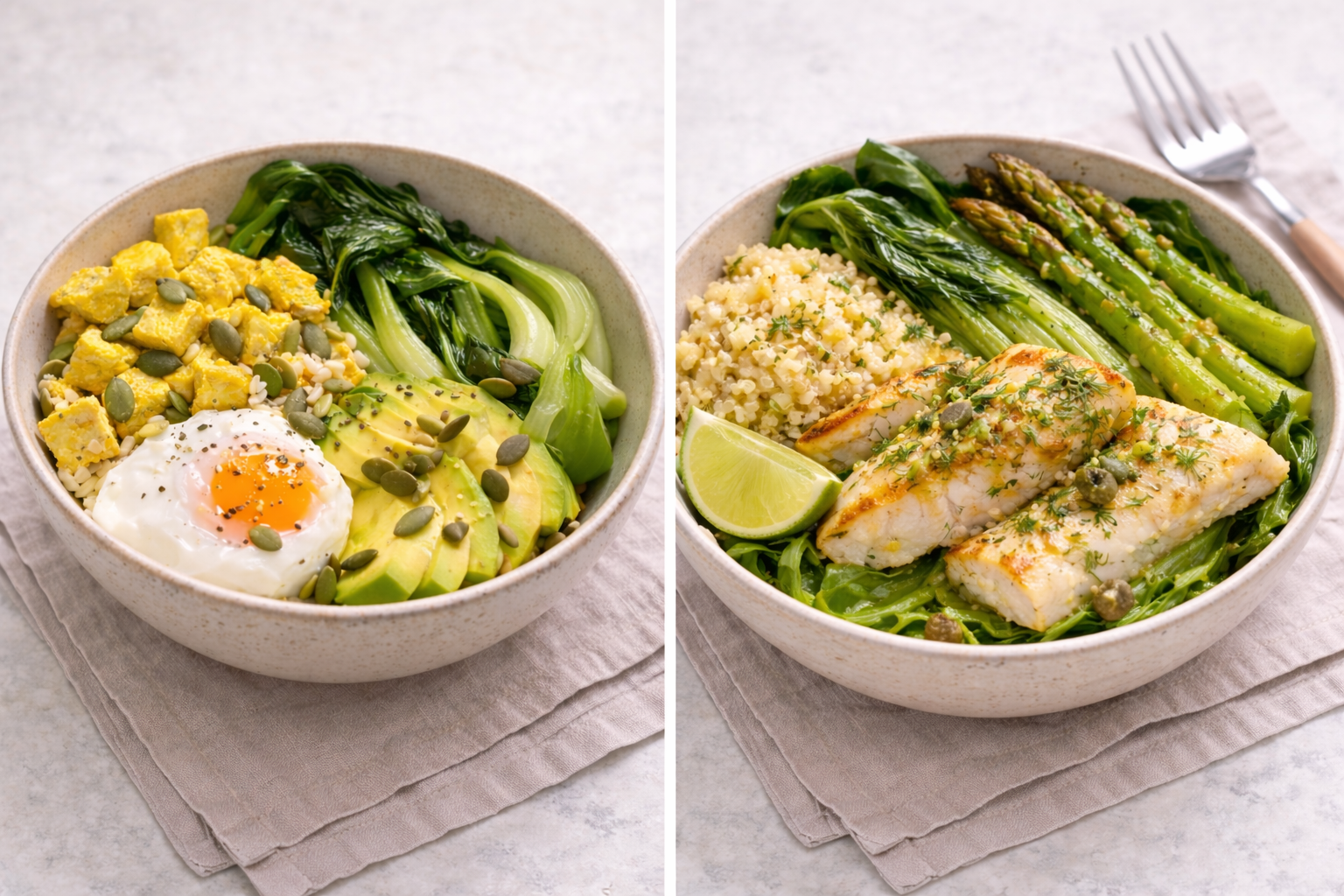
These two recipes are designed not just to “look healthy,” but to actively support the body’s capacity to rebuild vitality, hormonal balance, and long-term resilience.
From both a Chinese Medicine and modern physiological perspective, Jing and DHEA are best supported by foods that are easy to digest, rich in essential building blocks, and calming to the nervous system.
Gently cooked fish, warm vegetables, healthy fats, and simple mineral-rich condiments provide exactly this foundation.
Flathead and other white fish supply highly bioavailable protein, iodine, selenium, and omega-3 fats, which are essential for thyroid function, adrenal recovery, hormone synthesis, and cellular repair.
These nutrients directly support the pathways involved in DHEA production and hormone conversion. Unlike heavy or fried proteins, lightly pan-steamed or gently sautéed fish places minimal burden on digestion, allowing more energy to be directed toward repair and regeneration rather than processing stress.
Cooking methods such as light steaming, quick sautéing, and gentle warming preserve nutrients while making food easier for the spleen and digestive system to transform into usable energy (Post-Heaven Jing).
Warm, moist, cooked foods are especially important for people who are depleted, hormonally fragile, fatigued, or under chronic stress. Raw or overly cold foods may look “healthy,” but often weaken digestion and slowly drain reserves in vulnerable individuals.
Bok choy, asparagus, rocket, and greens support liver detoxification, estrogen clearance, and antioxidant protection. This reduces inflammatory and metabolic load on the adrenals and endocrine system.
Asparagus and leafy greens are also rich in folate and magnesium, supporting methylation and nervous system stability—both critical for epigenetic regulation and hormonal resilience.
Healthy fats from olive oil, avocado, seeds, and eggs provide the cholesterol backbone required for steroid hormone production, including DHEA, progesterone, and estrogen. Without sufficient high-quality fats, the body simply lacks the raw materials to rebuild hormonal pathways.
Lime, herbs, and gentle acids stimulate digestion, bile flow, and mineral absorption, enhancing nutrient uptake without overstimulating the system.
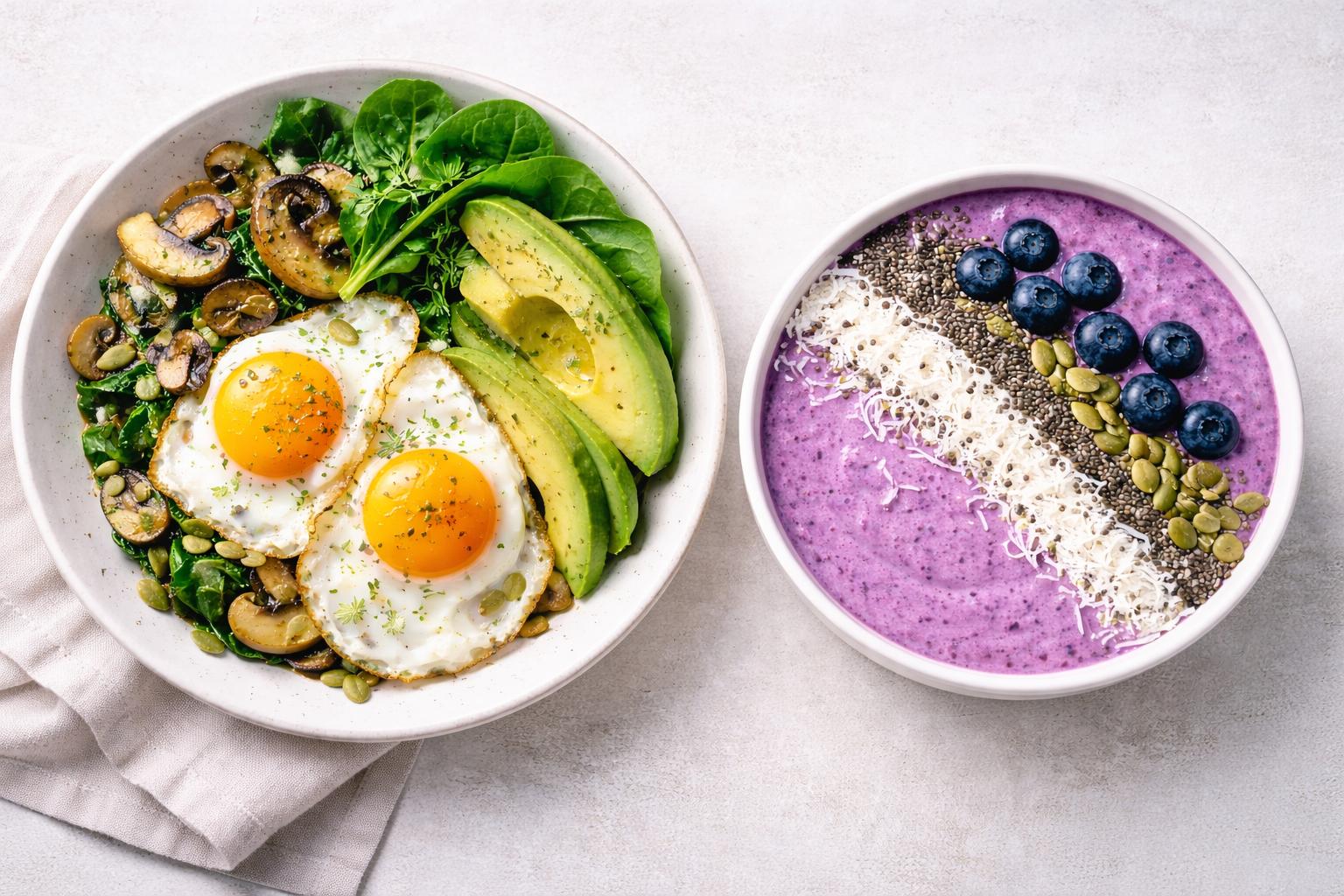
The warm breakfast bowl with egg, tofu, turmeric, and greens further supports Jing and DHEA by stabilising morning blood sugar, reducing cortisol spikes, and providing sustained amino acids for adrenal repair.
Turmeric gently reduces inflammatory signalling that can suppress hormone production, while pumpkin seeds and tofu contribute zinc, magnesium, and phyto-supportive compounds for endocrine balance.
Together, these bowls work on multiple levels:
• Supporting mitochondrial and cellular energy
• Reducing digestive and inflammatory stress
• Providing hormone-building nutrients
• Stabilising blood sugar and cortisol
• Nourishing kidney and adrenal reserves
• Enhancing detoxification and metabolic efficiency
This is why these meals are not “quick fixes,” but daily cultivation practices. Over time, consistent choices like these protect Jing, preserve DHEA, and help prevent deeper depletion. They teach the body that it is safe, nourished, and supported enough to shift out of survival mode and back into restoration.
When used regularly, especially during periods of fatigue, peri-menopause, burnout, recovery, or emotional strain, these bowls become simple but powerful clinical tools at home—supporting long-term vitality, hormonal balance, and healthy ageing.
For more information on DHEA and JIng, go to our Integrative Wellness Blog at Flow in Nature.

Golden Jing-Boosting Breakfast Bowl
With Turmeric Tofu, Soft Egg, Bok Choy & Avocado
A warming, hormone-supportive, metabolism-friendly breakfast for resilience and vitality
Why this bowl works
This breakfast supports DHEA and Jing by combining:
• Gentle protein (egg + tofu) for adrenal repair
• Healthy fats (avocado + olive oil) for hormone building
• Mineral-rich greens for nervous system support
• Warming spices (turmeric, ginger) for digestion and circulation
It’s satisfying without being heavy. perfect for midlife energy and blood sugar stability.
Ingredients (Serves 1)
• 1 free-range egg
• 100 g firm tofu, cut into small cubes
• 1 small bunch bok choy, sliced
• ¼ ripe avocado, sliced
• 1 tbsp pumpkin seeds
For the golden tofu
• 1 tbsp extra virgin olive oil
• ½ tsp ground turmeric
• Pinch black pepper (activates turmeric)
• Pinch sea salt
• Optional: ¼ tsp grated fresh ginger
Optional flavour finish (choose one)
• Tamari or coconut aminos (½ tsp)
• Sesame oil (a few drops)
• Lime or lemon squeeze
Method
1. Prepare the egg
Bring a small saucepan of water to a gentle boil.
Lower in the egg and simmer for 6–7 minutes for a soft centre.
Remove, cool slightly, peel, and set aside.
2. Golden tofu
Heat olive oil in a non-stick pan on low–medium.
Add tofu cubes, turmeric, pepper, salt, and ginger.
Sauté gently for 4–5 minutes, turning carefully until warm and lightly golden.
Keep heat gentle — we want nourishment, not dryness.
3. Cook the bok choy
Add bok choy to the same pan with a splash of water.
Cover and steam-sauté for 2–3 minutes until just tender and bright.
4. Assemble the bowl
In a warm bowl:
• Add bok choy and turmeric tofu
• Slice egg in half and place on top
• Add avocado
• Sprinkle pumpkin seeds
• Finish with optional seasoning
5. Eat mindfully
Sit. Breathe. Eat slowly.
This is a “build-your-reserves” meal.
How This Supports Hormones & Ageing Well
Egg
Supports choline, B vitamins, and hormone synthesis
Tofu
Provides gentle plant protein + phyto-support for metabolism
Avocado
Feeds steroid hormone pathways
Pumpkin Seeds
Zinc + magnesium for adrenal resilience
Turmeric
Reduces inflammation and supports liver-hormone metabolism
Bok Choy
Minerals + fibre for gut–hormone communication
When To Use This Bowl
Ideal for:
• Perimenopause / menopause preparation
• Adrenal fatigue
• Burnout recovery
• Blood sugar instability
• Morning fatigue
• “Tired but wired” patterns
Best eaten:
3 mornings per week during rebuilding phases.
Variations (Optional)
• Add 2 tbsp cooked quinoa if extra grounding is needed
• Swap egg for tempeh for vegan version
• Add miso broth on the side in winter
• Add fresh herbs (chives, parsley) in warmer months
Isabel’s Clinical Tip
If you often skip breakfast or rely on coffee first thing, this bowl can be transformative.
It tells your nervous system:
“I am safe. I am nourished. I don’t need to run on stress.”
Hormones respond accordingly.

Warming Flathead with Bok Choy, Asparagus & Olive Oil Lime Dressing
A Jing-supportive, DHEA-friendly nourishing bowl
Why This Dish Works
This bowl supports hormonal resilience and healthy aging by combining:
• High-quality protein for adrenal and hormone repair
• Healthy fats for steroid hormone production
• Mineral-rich greens for nervous system support
• Gentle warmth to protect digestion and energy reserves
It’s light, satisfying, and ideal for midlife metabolism.
Ingredients (Serves 1–2)
• 2 flathead fillets (fresh, skin on if possible)
• 1 bunch bok choy, chopped
• 1 bunch asparagus, trimmed
• ½ cup cooked quinoa (fluffy, warm)
• 1 handful rocket (optional, small amount)
For cooking
• Extra virgin olive oil
• Sea salt
• Cracked black pepper
For the olive oil lime dressing
• 2 tbsp extra virgin olive oil
• Juice of ½ lime
• Zest of ½ lime
• ½ tsp Dijon mustard
• Pinch sea salt
Optional flavour boosters (choose 1–2)
• Fresh dill or parsley
• Capers (very small amount)
• Toasted sesame seeds
Method
Cook the quinoa
Rinse quinoa well and cook until light and fluffy. Keep warm.Prepare the greens
Lightly steam or sauté bok choy and asparagus with a drizzle of olive oil and a pinch of salt until just tender and vibrant. Set aside.Cook the flathead
Heat a pan gently with olive oil.
Season fish with salt and pepper and cook skin-side down first until golden and crisp, then turn briefly to finish. Avoid overcooking.Make the dressing
Whisk olive oil, lime juice, zest, Dijon, and salt until emulsified.Assemble the bowl
Place quinoa on the side of a warm bowl.
Add bok choy and asparagus.
Top with flathead.
Add a small handful of rocket if using.
Drizzle with dressing and finish with herbs or seeds.


Leave a Reply